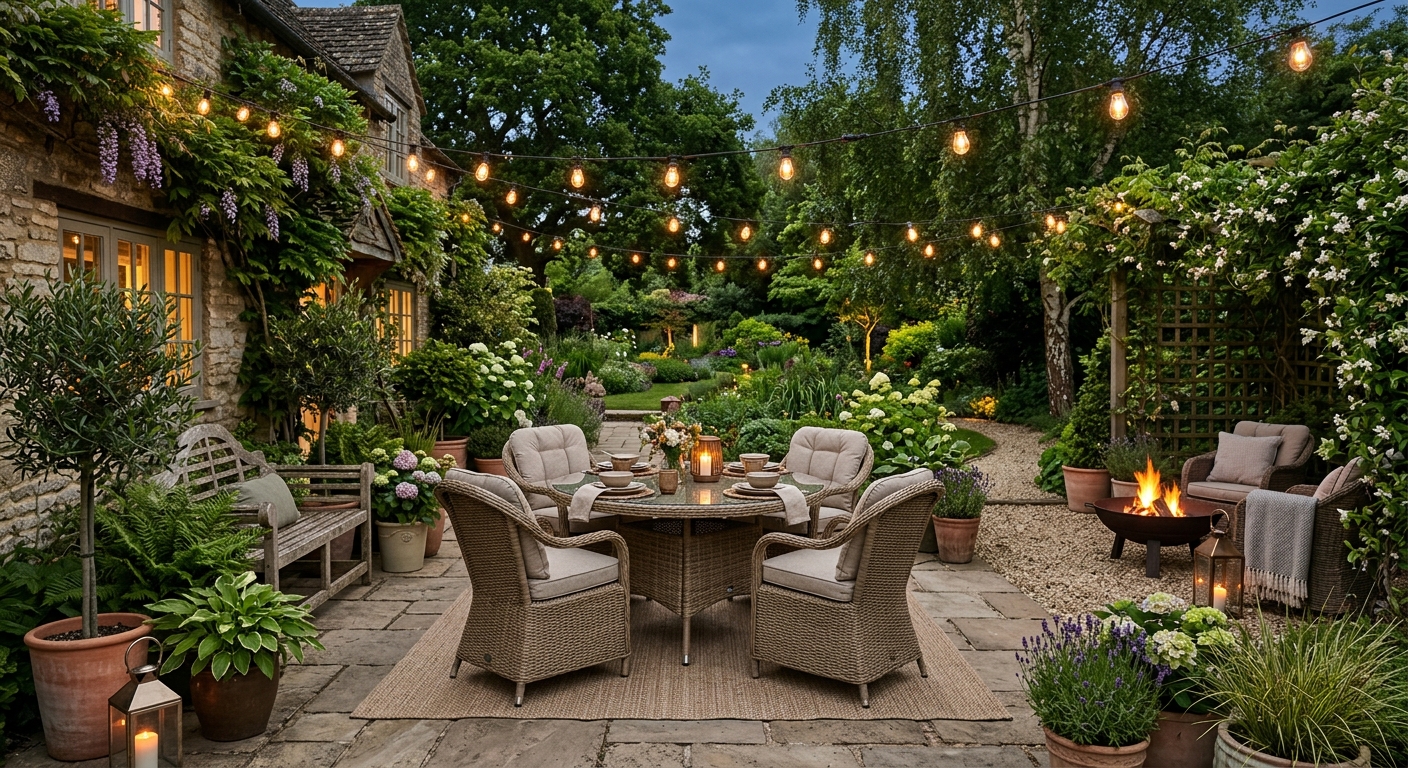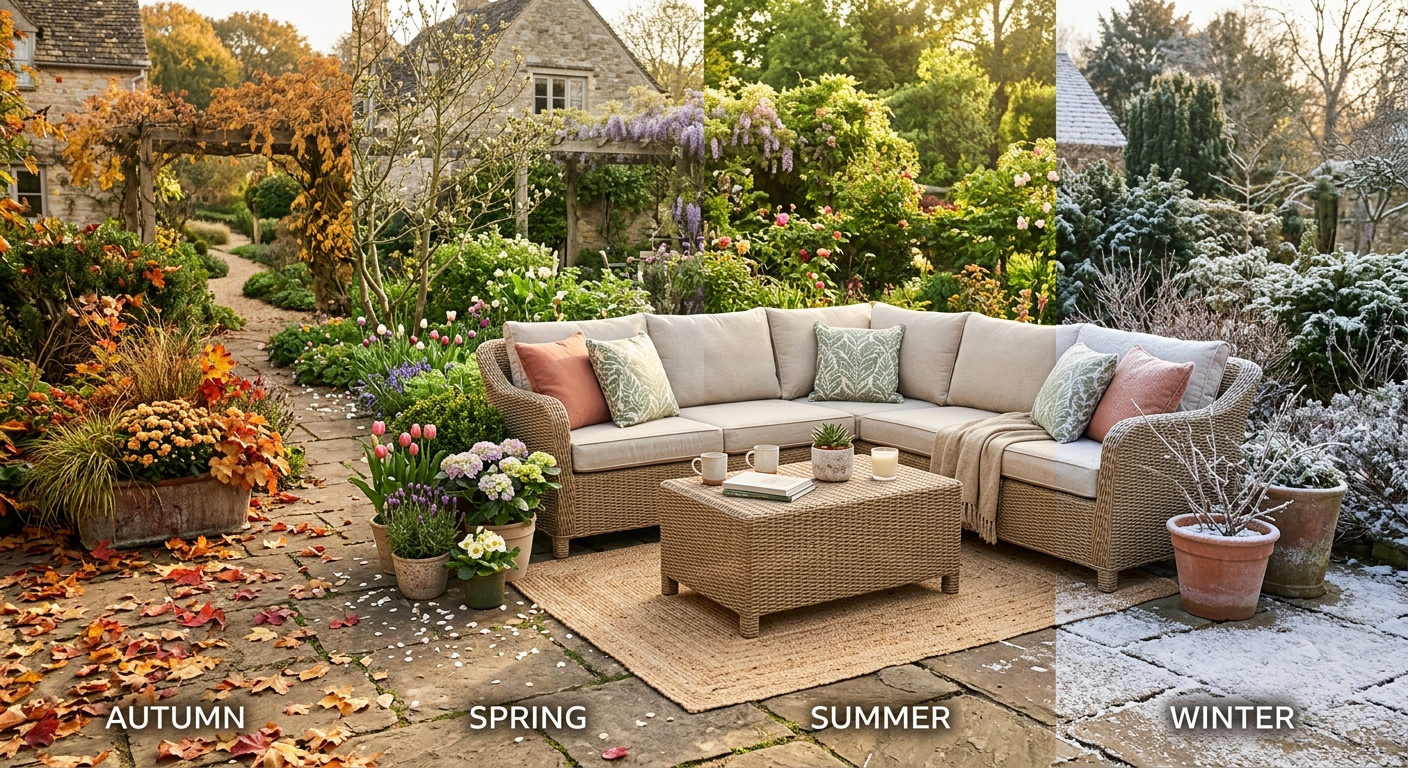
Your outdoor furniture faces a relentless opponent: the weather. From scorching summer sun to freezing winter nights, from spring downpours to fall humidity, every season tests your patio furniture in different ways. Choosing furniture that can handle all four seasons — or knowing how to protect it when it cannot — is the difference between furniture that lasts a decade and furniture that needs replacing after two years. This guide walks you through exactly what to look for, season by season, so you can invest confidently.
Why Seasonal Durability Matters
Many homeowners buy outdoor furniture based on how it looks in a showroom or on a summer afternoon. But that same furniture will spend 75% of its life facing conditions far harsher than a pleasant July evening. UV rays degrade plastics and fade fabrics. Freeze-thaw cycles crack untreated wood and split cheap welds. Humidity breeds mold and mildew on cushions. Rain corrodes metal fasteners and rusts unprotected steel.
The total cost of ownership for outdoor furniture is not the purchase price — it is the purchase price plus maintenance, repairs, covers, and eventual replacement. Furniture built for seasonal durability costs more upfront but costs far less over its lifetime.
Spring: Rain, Humidity, and Rapid Temperature Changes
Spring is the season of moisture. Frequent rain, rising humidity, and temperature swings from cool nights to warm days create conditions that test every material differently.
What Spring Demands from Furniture
- Moisture resistance: Materials must withstand repeated wetting without absorbing water, warping, or developing mold
- Rust resistance: Metal frames and fasteners need protective coatings that prevent corrosion from sustained humidity
- Mold and mildew defense: Cushions and fabrics must resist fungal growth in damp conditions
- Dimensional stability: Wood must not swell, crack, or warp as humidity fluctuates
Best Materials for Spring Conditions
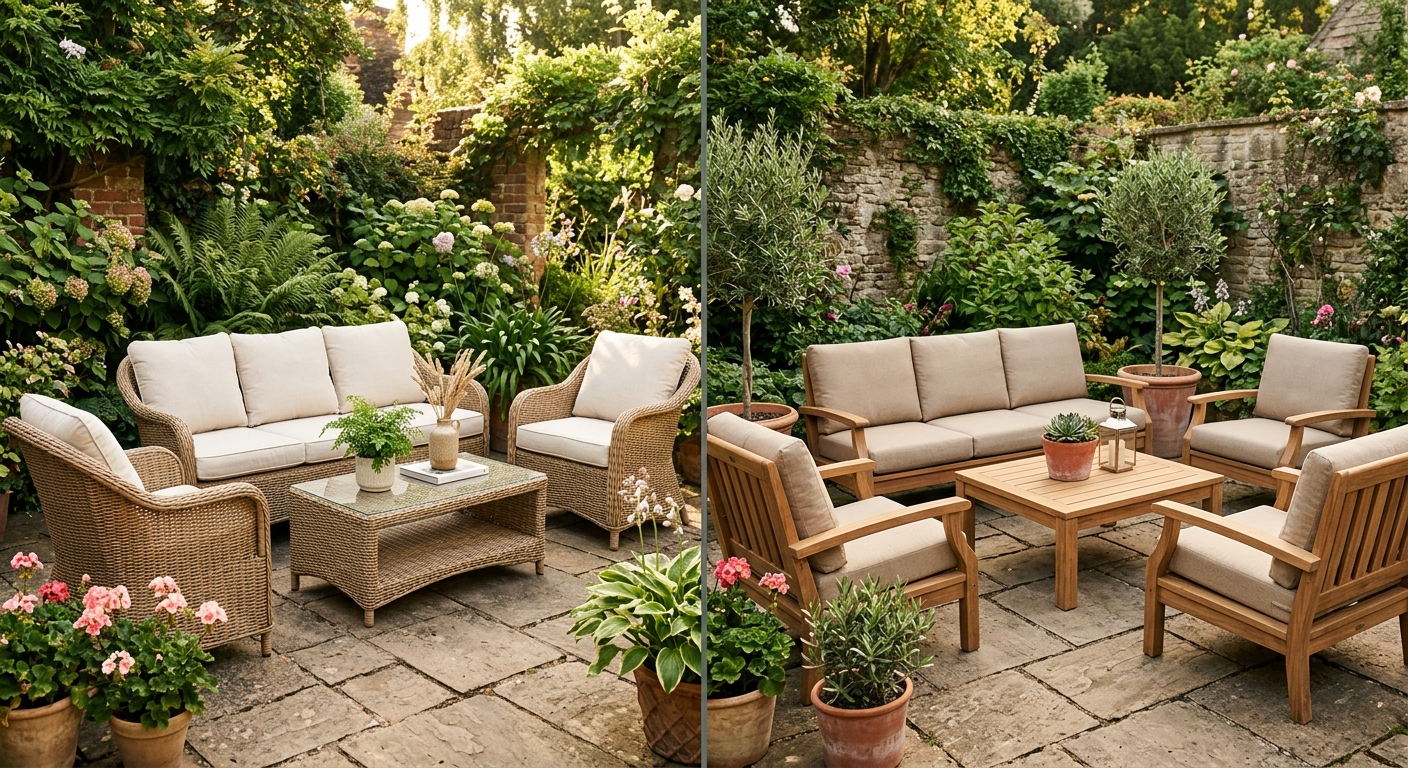
PE rattan with powder-coated aluminum frames is the top performer in wet spring conditions. The synthetic weave does not absorb moisture, and aluminum cannot rust. Teak is also excellent — its natural oils repel water and resist fungal growth. Powder-coated steel works well if the coating is intact, but any scratch exposes bare metal to spring moisture.
Avoid untreated steel, natural wicker (which absorbs water and rots), and unsealed wood. If you already own these materials, apply a protective sealant before spring arrives.
Summer: UV Exposure, Heat, and Dry Conditions
Summer is the season of intense sunlight and high temperatures. UV radiation is the primary threat — it breaks down chemical bonds in plastics, fades fabric dyes, and dries out natural oils in wood.
UV Degradation: The Silent Killer
UV rays cause damage that is not immediately visible. Over time, they cause:
- Plastic and resin components to become brittle and crack under stress
- Fabric colors to fade, sometimes dramatically within a single season
- Wood to dry out, leading to checking, splitting, and surface roughness
- Rubber and elastic components (like bungee cords in some chairs) to lose elasticity
Quality PE rattan is UV-stabilized during manufacturing, meaning stabilizers are mixed into the resin before weaving. This provides deep protection that surface treatments cannot match. Look for rattan rated for 500+ hours of UV exposure testing.
Managing Summer Heat
Beyond UV, summer heat affects comfort and material performance:
- Dark-colored metal furniture can become dangerously hot to the touch — choose lighter colors or add cushions
- Aluminum stays cooler than steel because it dissipates heat more efficiently
- Solution-dyed acrylic fabrics (like Sunbrella) resist fading far better than printed polyester
- Teak develops surface heat but cools quickly when moved to shade
Fall: Temperature Swings, Falling Debris, and Increasing Moisture
Fall brings some of the most challenging conditions for outdoor furniture. Days may be warm and sunny while nights drop near freezing. Falling leaves trap moisture against furniture surfaces. Humidity rises again after the dry summer.
Fall Maintenance Priorities
- Leaf removal: Do not let leaves accumulate on furniture — they trap moisture and stain surfaces. Sweep or blow them off regularly.
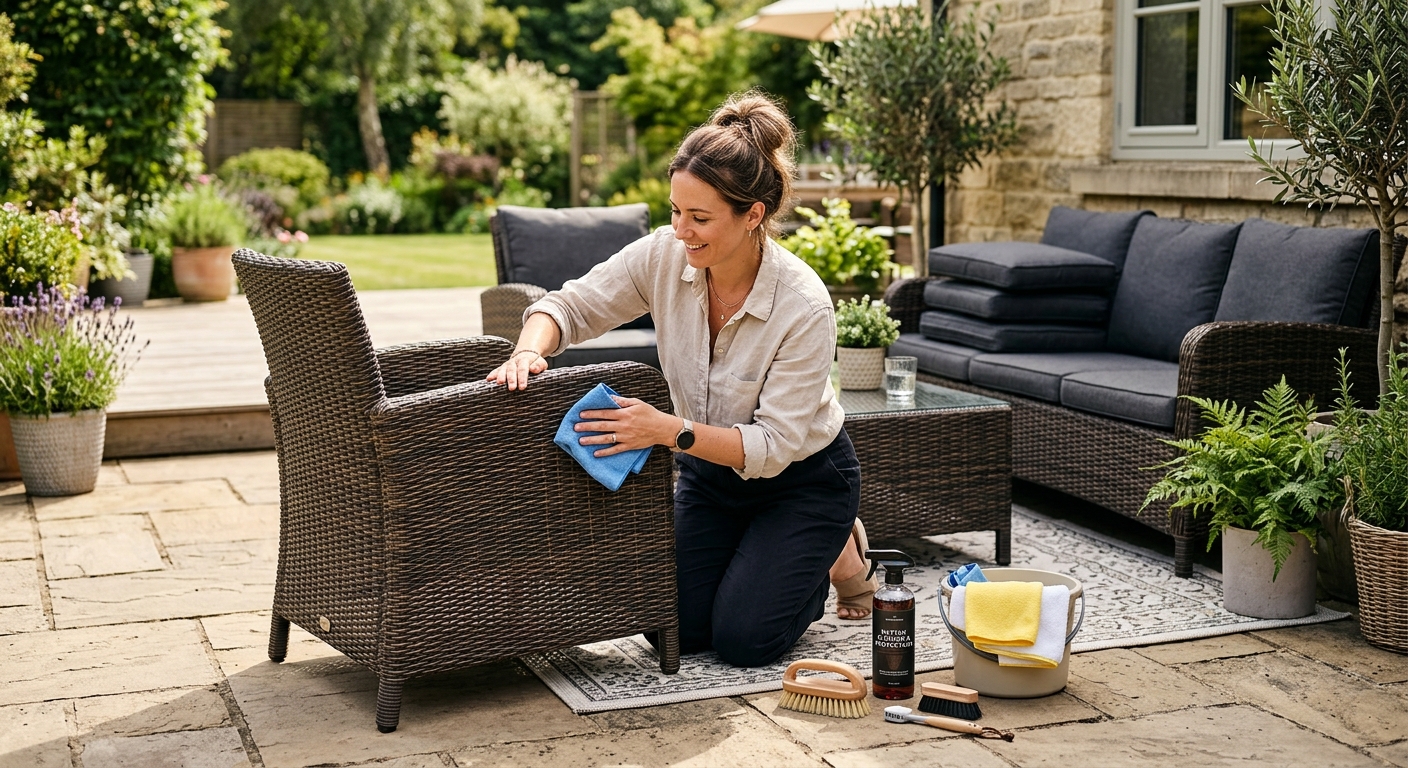
- Deep cleaning: Fall is the ideal time for a thorough cleaning before winter storage. Remove summer grime, pollen, and bird droppings that can etch into surfaces over winter.
- Cushion care: Wash and thoroughly dry all cushions before storing. Even slightly damp cushions will develop mold over winter.
- Hardware check: Inspect and tighten all bolts and screws. Temperature swings cause metal to expand and contract, loosening fasteners over time.
Winter: Freezing Temperatures, Snow, and Ice
Winter is the harshest season for outdoor furniture. Freezing temperatures make materials brittle. Snow accumulation adds weight that can bend frames. Ice expands in cracks, widening them with each freeze-thaw cycle.
Which Materials Survive Winter Outdoors
- Teak: Excellent winter performer. Natural oils prevent moisture penetration. May develop silver-gray patina, which is cosmetic, not structural damage.
- Powder-coated aluminum: Immune to rust and unaffected by freezing. The coating may become more brittle in extreme cold but generally holds up well.
- PE rattan: Can become brittle in sub-freezing temperatures. Best stored indoors or covered during winter. If left out, avoid sitting on it during freezing weather.
- Cast iron: Heavy and stable but vulnerable to rust if the protective coating is compromised. Inspect and touch up any chips before winter.
Winter Storage Best Practices
- Store cushions indoors — they will absorb moisture and develop mold even under covers
- Use furniture covers that are breathable, not plastic — trapped moisture causes more damage than exposure
- Elevate furniture off the ground to prevent freezing to the patio surface
- Remove glass tabletops and store them vertically in a protected area to prevent shattering from thermal stress
- Drain any water features, fountains, or fire pit bowls to prevent freeze damage
Material Performance Summary by Season
Here is a quick-reference guide to how each major material performs across all four seasons:
- PE Rattan + Aluminum: Spring excellent, Summer excellent (if UV-stabilized), Fall good, Winter fair (store or cover)
- Teak: Spring excellent, Summer good (oil annually), Fall excellent, Winter excellent
- Powder-coated Steel: Spring good (watch for coating damage), Summer good, Fall good, Winter fair (cover and inspect)
- Cast Iron: Spring fair (rust risk), Summer good, Fall fair, Winter fair (requires maintenance)
- Natural Wicker: Spring poor (absorbs moisture), Summer fair, Fall poor, Winter poor (must store indoors)
Conclusion
Choosing outdoor furniture that lasts means thinking beyond the summer barbecue. Every material has seasonal strengths and weaknesses. PE rattan with aluminum frames offers the best all-around performance for most climates. Teak is the premium choice for longevity, especially in regions with harsh winters. The key is matching your material to your climate, investing in quality construction, and committing to seasonal maintenance. With the right choices, your outdoor furniture can provide comfort and beauty for a decade or more, regardless of what the weather brings.
Key Takeaways
- Match materials to your climate before you shop — PE rattan and aluminum excel in humid or coastal areas.
- Teak and cedar handle freeze-thaw cycles better than unfinished softwoods.
- Cushions and hardware fail first; prioritize weather-rated fabrics and rust-resistant fasteners.
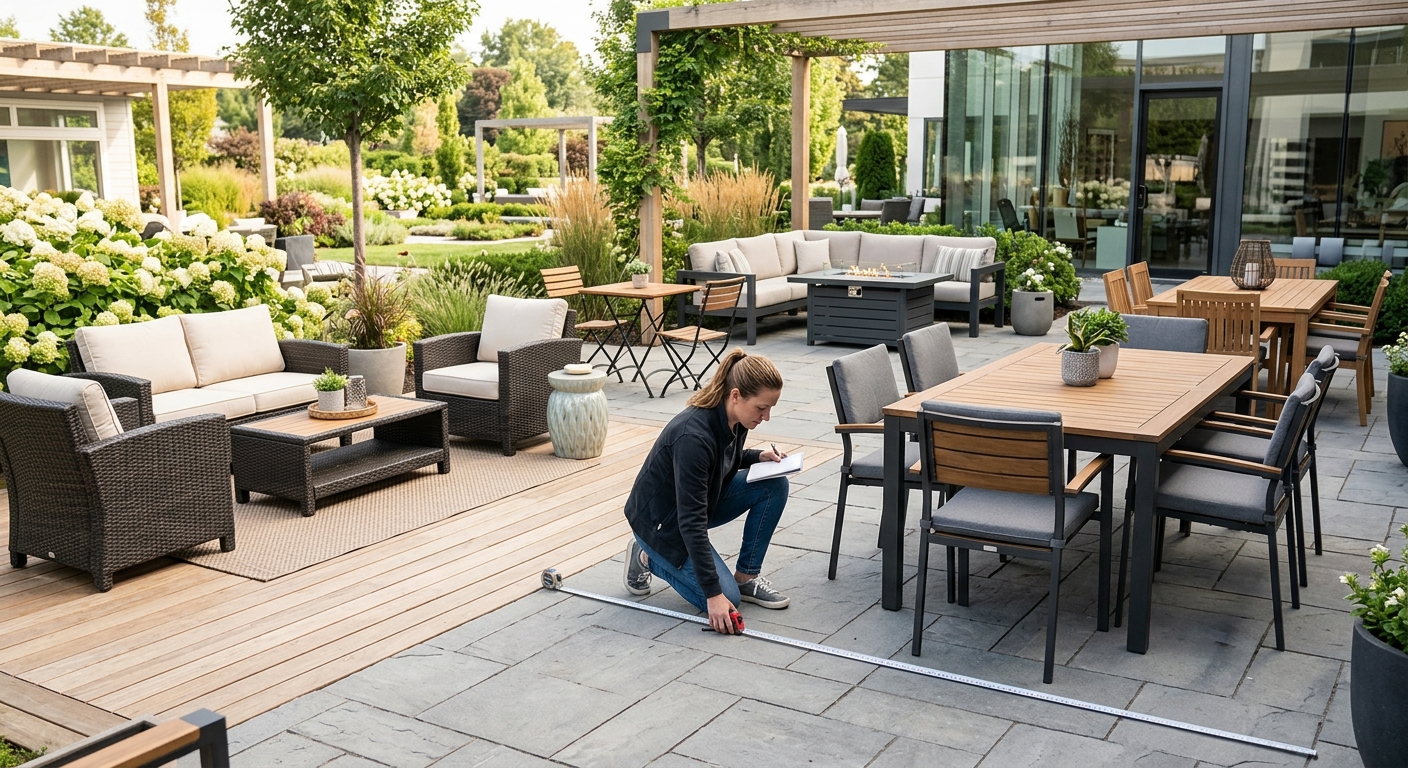
- Measure your patio and plan traffic flow before choosing a dining or lounge set size.
- Budget for covers and storage — protection multiplies furniture lifespan.
- Buy modular or stackable pieces if your outdoor space changes with the seasons.
Frequently Asked Questions
UV-stabilized PE rattan can stay outside year-round in mild climates. In regions with freezing winters, cover the furniture or store it indoors. Always store cushions separately, as they will develop mold even under covers in damp conditions.
Teak does not require covering in winter — its natural oils protect it from moisture and freezing. However, covering teak furniture will keep it cleaner and reduce the rate of patina development if you prefer the original golden color.
Aluminum and PE rattan are the best choices for coastal areas. Aluminum cannot rust, even in salt air. PE rattan is unaffected by salt and humidity. Avoid steel and iron, which corrode rapidly in coastal environments.
Choose cushions with solution-dyed acrylic fabric (such as Sunbrella), which resists UV fading for years. Store cushions when not in use, or use furniture covers. Avoid leaving dark-colored cushions in direct sunlight for extended periods.
Powder-coated steel is rust-resistant, not rust-proof. The coating prevents moisture from reaching the steel, but any scratch, chip, or crack exposes bare metal. Inspect the coating regularly and touch up damage with matching paint to prevent corrosion.
Looking for premium outdoor furniture?
Browse our handcrafted collections designed for every garden, patio, and season.
Explore Collection