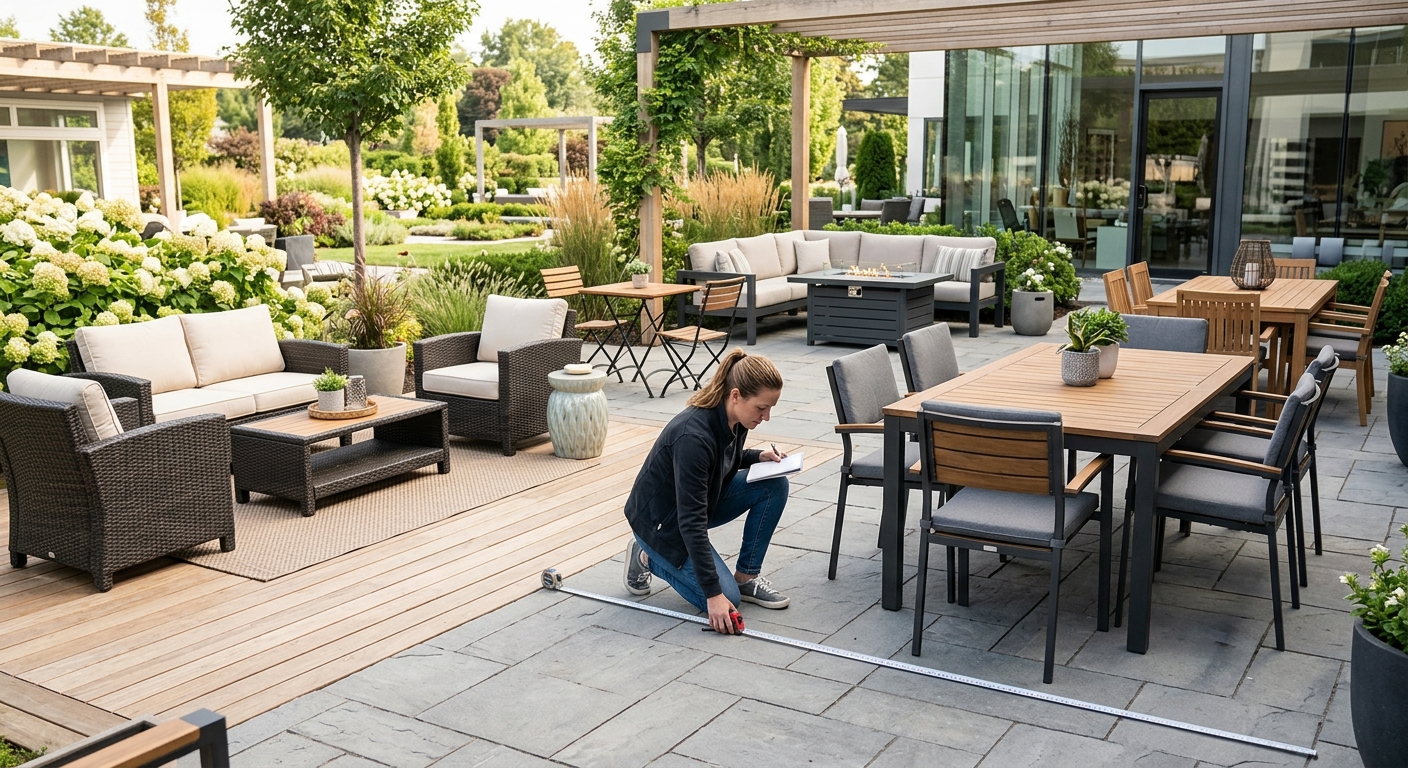
Buying garden furniture should be exciting — you are investing in your outdoor lifestyle, creating a space for family meals, relaxation, and entertaining. But it is also an investment that can go wrong quickly if you make common purchasing mistakes. Furniture that is too large for your patio, materials that cannot handle your climate, or sets that lack the seating you need are all expensive errors that homeowners make every day. This guide covers the 10 most common mistakes people make when buying garden furniture and exactly how to avoid each one.
Mistake 1: Not Measuring the Space First
This is the single most common mistake, and it causes more returns and regrets than any other. People fall in love with a dining set in a showroom or online, buy it, and discover it overwhelms their patio or does not fit through the gate.
How to Avoid It
- Measure your patio or garden area before browsing — length, width, and any permanent obstacles
- Account for clearance: leave 18-24 inches behind chairs and 36 inches for walkways
- Mark the furniture footprint on your patio with painter's tape to visualize the size
- Check that furniture will fit through gates, doorways, and narrow passages before purchasing
- Remember that a 6-person dining set needs at least a 10x10 foot area to function properly
Mistake 2: Choosing Price Over Quality
A $150 dining set that lasts two seasons is more expensive over five years than a $400 set that lasts ten. Yet many buyers focus exclusively on the initial price tag, ignoring construction quality, material durability, and warranty coverage.
How to Avoid It
- Calculate cost per year of expected use, not just purchase price
- Look for powder-coated aluminum or steel frames, not bare metal
- Check for UV-stabilized PE rattan, not cheap PVC that becomes brittle in sunlight
- Inspect joint construction — welded and bolted joints outlast glued or stapled ones
- Read warranty terms carefully — a 12-month warranty signals expected lifespan
Mistake 3: Ignoring Your Climate
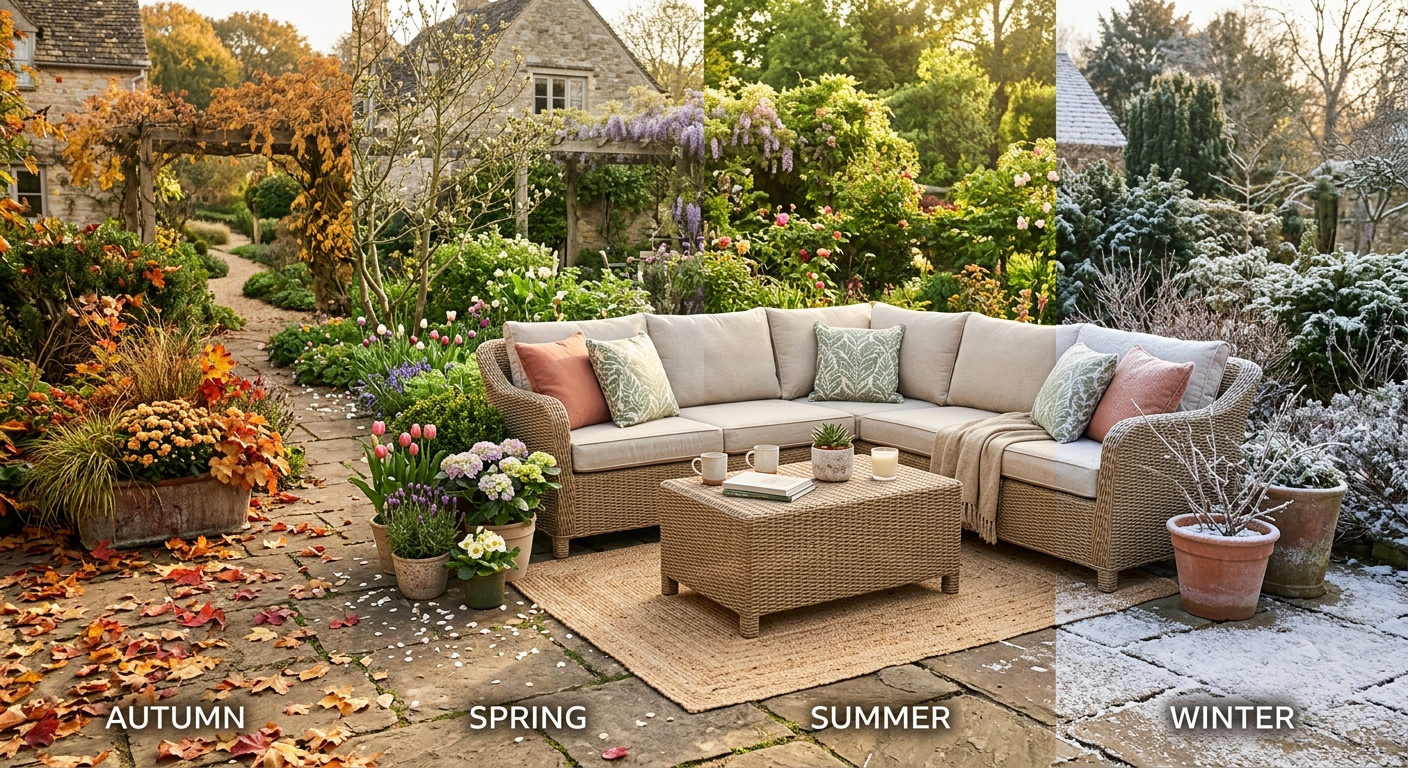
Furniture that thrives in a dry climate may disintegrate in a humid one. Materials that handle summer heat may crack in winter freezes. Buying without considering your local weather patterns leads to premature deterioration.
How to Avoid It
- Humid and coastal areas: Choose aluminum frames and PE rattan. Avoid untreated steel and iron.
- Hot and dry climates: Choose UV-stabilized materials and solution-dyed fabrics. Light colors stay cooler.
- Cold and snowy regions: Choose teak or powder-coated aluminum. Plan for winter storage of cushions and covers.
- Year-round rain: Choose materials that do not absorb moisture. Ensure cushions dry quickly and have removable, washable covers.
Mistake 4: Buying Without Testing Comfort
Furniture that looks beautiful but is uncomfortable will rarely be used. Online shopping makes this mistake particularly easy — you cannot sit in a chair before buying it.
How to Avoid It
- Check seat depth: 18-22 inches is comfortable for most adults for dining; 24+ inches for lounging
- Check seat height: 16-18 inches is standard for dining; lower for lounge furniture
- Look for cushion thickness: 2+ inches for dining, 4+ inches for lounge seating
- Read reviews specifically mentioning comfort, not just appearance
- Check the backrest angle: 90-100 degrees for dining, 100-110 degrees for lounging
Mistake 5: Overlooking Cushion Quality
Cushions are the first component to fail on outdoor furniture. Cheap cushions flatten, fade, absorb water, and develop mold within a single season. Yet many buyers focus entirely on the frame and treat cushions as an afterthought.
How to Avoid It
- Look for solution-dyed acrylic fabric (such as Sunbrella) — it resists fading for years
- Choose quick-drying foam inserts that do not absorb and retain water
- Ensure covers are removable and machine washable
- Check for zipper quality — cheap zippers break after a few washes
- Verify that cushions are included with the set, not sold separately at premium prices
Mistake 6: Forgetting About Storage
Even all-weather furniture benefits from protection during the off-season. But if you have nowhere to store cushions, covers, or furniture during winter, you need to factor that into your purchasing decisions.
How to Avoid It
- Assess your storage space before buying — do you have a garage, shed, or covered area?
- Choose furniture that can stay outdoors year-round with covers (teak, aluminum, PE rattan)
- Consider buying a storage box that doubles as seating
- Look for stackable or folding chairs that reduce storage footprint
- Budget for furniture covers if you do not have indoor storage space
Mistake 7: Not Considering Maintenance Requirements
Different materials demand different levels of upkeep. Buying high-maintenance furniture when you have limited time for care leads to neglected furniture and premature replacement.
How to Avoid It
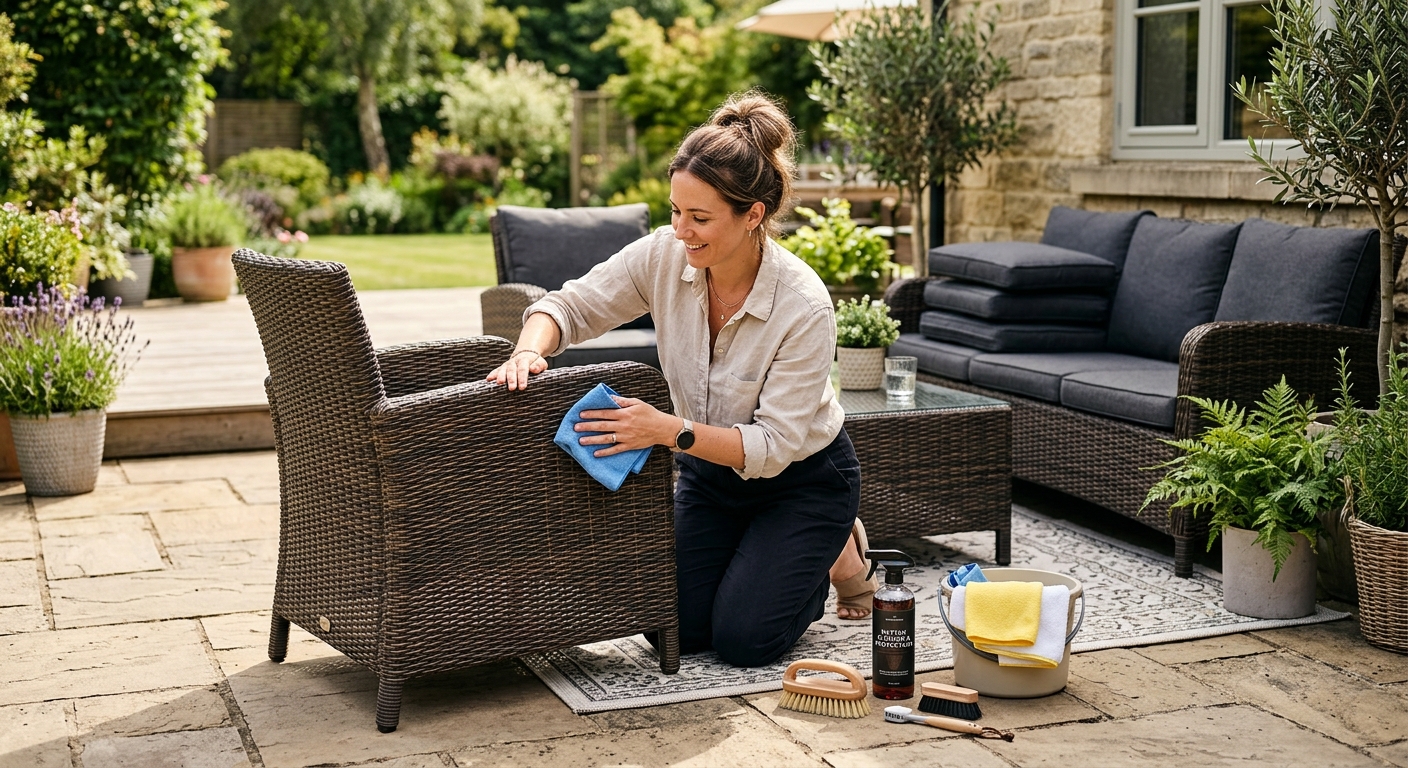
- Low maintenance: PE rattan and aluminum — clean with soap and water, no sealing required
- Medium maintenance: Teak — clean annually, oil optionally, no sealing needed
- High maintenance: Cedar, acacia, steel, iron — require annual sealing, rust inspection, and touch-ups
- Be honest about how much maintenance you will actually do, not how much you intend to do
Mistake 8: Choosing Style Over Function
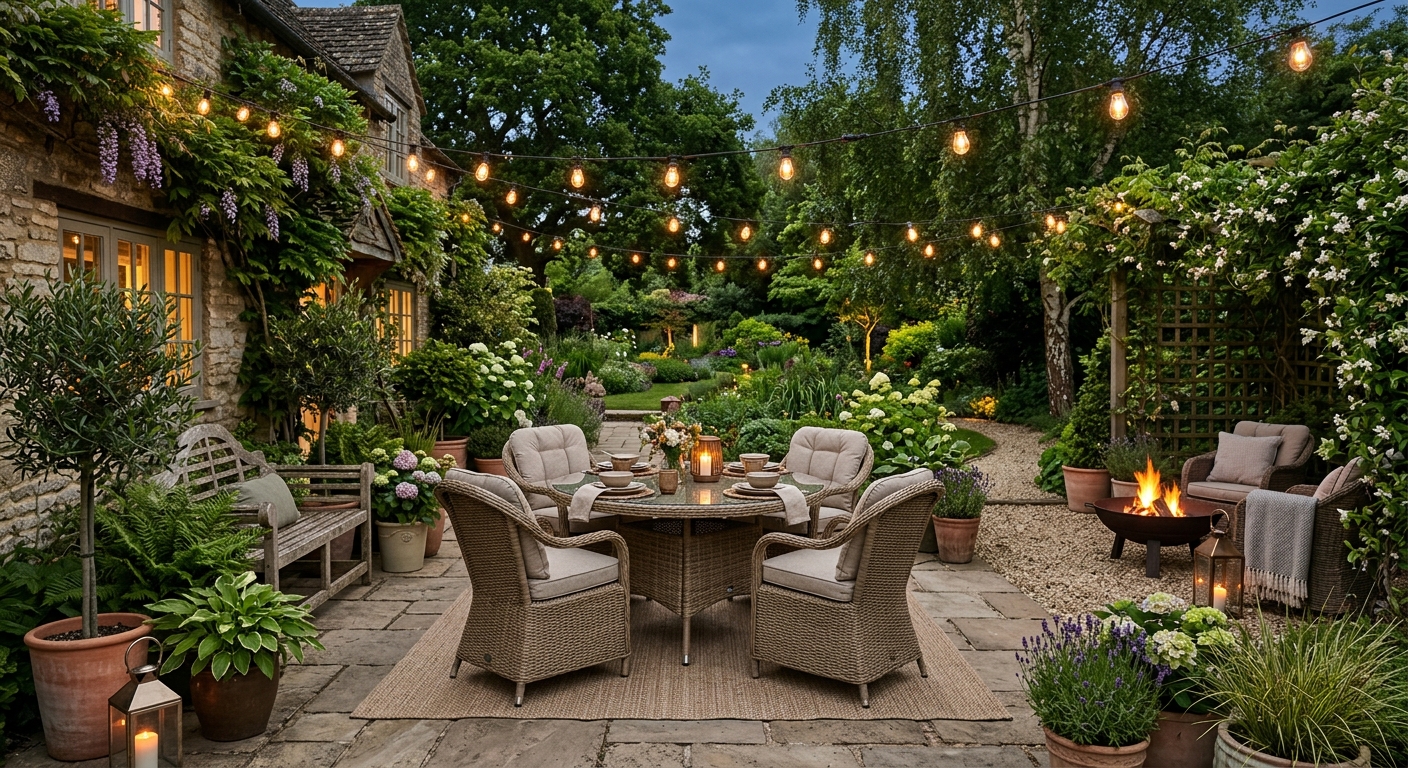
A stunning lounge set that seats two is useless if you have a family of five. A beautiful dining table with no shade coverage is too hot to use in summer. Style matters, but function determines whether you actually use the furniture.
How to Avoid It
- Start with your functional needs: how many people, how often, for what purpose
- Ensure dining sets have enough chairs for your household plus 2-4 guests
- Consider an umbrella or pergola if your patio has no natural shade
- Choose furniture with the right configuration for your space — corner sets for small patios, separate pieces for large areas
Mistake 9: Ignoring Weight and Mobility
If you plan to rearrange your patio seasonally or store furniture indoors during winter, weight matters. A solid teak dining table that requires two people to lift is impractical if you need to move it frequently.
How to Avoid It
- Check the weight of each piece before purchasing
- Aluminum-frame rattan furniture is the lightest option — easy to move and store
- Solid wood and cast iron are the heaviest — plan for permanent placement
- Look for furniture with leveling feet if your patio surface is uneven
Mistake 10: Not Reading the Fine Print
Warranty terms, return policies, and shipping costs can turn a good deal into an expensive mistake. A set that looks like a bargain may have a 30-day return window, no warranty, and $200 in shipping fees.
How to Avoid It
- Read the warranty completely — what is covered, for how long, and what voids it
- Check the return policy — is there a restocking fee? Who pays return shipping?
- Verify what is included — are cushions, hardware, and covers part of the set?
- Check assembly requirements — some sets require 2+ hours and specialized tools
- Look for free shipping offers — shipping costs on large furniture can be substantial
Conclusion
Avoiding these 10 mistakes comes down to one principle: think before you buy. Measure your space, understand your climate, assess your maintenance willingness, and prioritize function alongside style. Quality outdoor furniture is an investment that pays dividends in comfort, durability, and enjoyment for years. Take the time to make informed decisions, and you will create an outdoor space that enhances your home and your lifestyle rather than becoming a source of frustration and regret. The right furniture, chosen carefully, transforms your patio from an empty slab into the most-used room in your house — one that happens to be outdoors.
Key Takeaways
- Measure your space and doorways before ordering large outdoor sets.
- Do not buy on looks alone — frame construction and fabric ratings matter more.
- Factor cushions, covers, and delivery into the true purchase cost.
- Ignore climate at your peril; indoor-only materials fail outdoors quickly.
- Check return policies, warranties, and replacement-part availability.
- Sit-test comfort when possible and verify weight capacity for family use.
Frequently Asked Questions
A quality 4-6 person dining set ranges from $350-$650. Lounge sets range from $350-$800. Budget for the best quality you can afford — the cost per year of use decreases significantly with better materials and construction. Avoid sets under $200 for anything larger than a bistro set.
Yes, if you research carefully. Read reviews focusing on comfort and durability, check dimensions against your measured space, and verify the return policy. Online retailers often offer better prices and wider selection than local stores. Just ensure you understand the return process before purchasing.
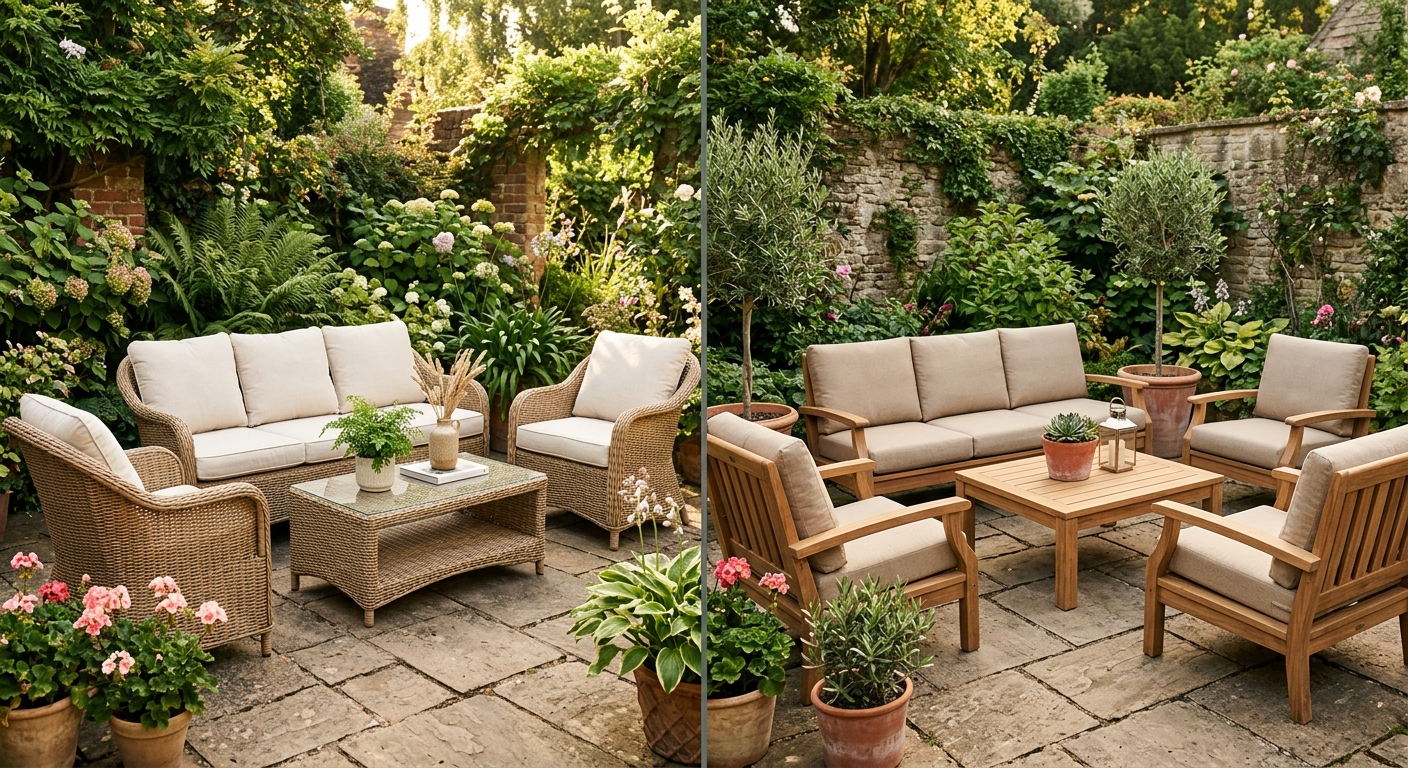
Material quality. The frame material determines durability, maintenance requirements, and weather resistance. PE rattan with aluminum frames offers the best balance of durability, low maintenance, and affordability for most homeowners. Teak is the premium choice for maximum longevity.
Sets offer better value and guaranteed style coordination. A 5-piece dining set typically costs 20-30% less than buying the table and chairs individually. However, mixing individual pieces allows for more personalized design. If you are furnishing a complete patio, buy a set. If you are adding to an existing arrangement, choose individual pieces.
Measure your patio, subtract 36 inches for walkway clearance, then compare the result to the furniture dimensions. For example, a 10x10 foot patio with 36-inch walkways leaves a 7x7 foot furniture footprint. A 47-inch round table with 6 chairs needs approximately a 7x7 foot area — it will fit, but tightly.
Shop with confidence
Explore durable outdoor collections chosen for real gardens — quality materials, thoughtful design, free shipping.
Explore Collection