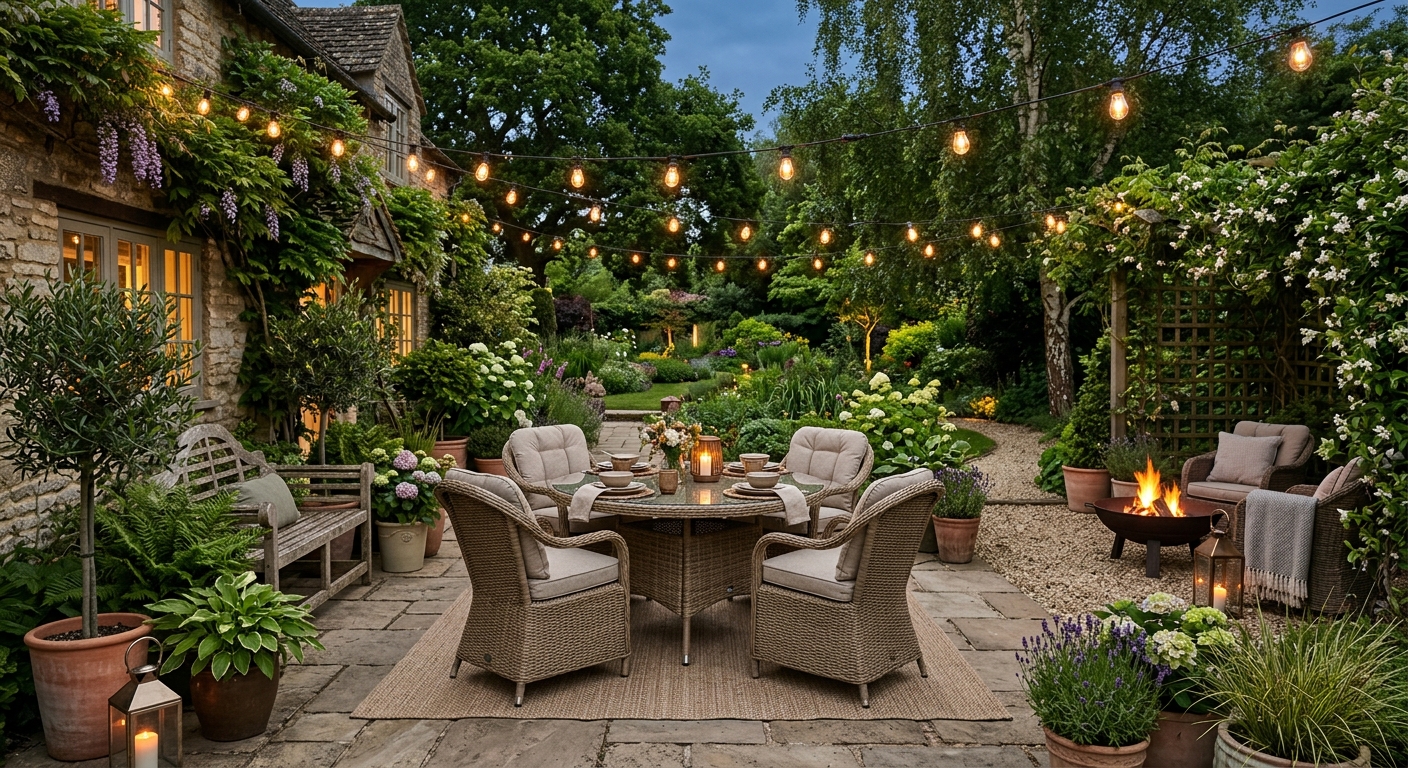
A well-designed patio and garden space extends your home into the outdoors, creating a place for morning coffee, family dinners, evening relaxation, and weekend gatherings. But transforming an empty patio or neglected yard into a cohesive, inviting outdoor living space requires more than placing a table and chairs on the nearest flat surface. It takes planning, an understanding of how you want to use the space, and thoughtful selection of furniture, lighting, plants, and decor. This guide walks you through the entire process, from initial assessment to final styling touches.
Step 1: Define Your Space and Its Purpose
Before buying anything, clearly define what your outdoor space is for. A patio designed for family dinners looks very different from one designed for solo reading or evening entertaining.
Common Outdoor Space Functions
- Dining area: A table and chairs for meals, positioned near the kitchen for convenience
- Lounge area: Comfortable seating for conversation, reading, or relaxing — think sofas, daybeds, and egg chairs
- Entertaining zone: A combination of dining and lounge seating, plus a fire pit or bar for gatherings
- Garden retreat: Benches, arbours, and decorative pieces integrated with plants and landscaping
- Multi-use space: Zones for different activities, separated by furniture arrangement or planters
Most patios serve multiple functions. The key is identifying your primary use and designing around it, with secondary functions accommodated as space allows.
Step 2: Measure and Map Your Space
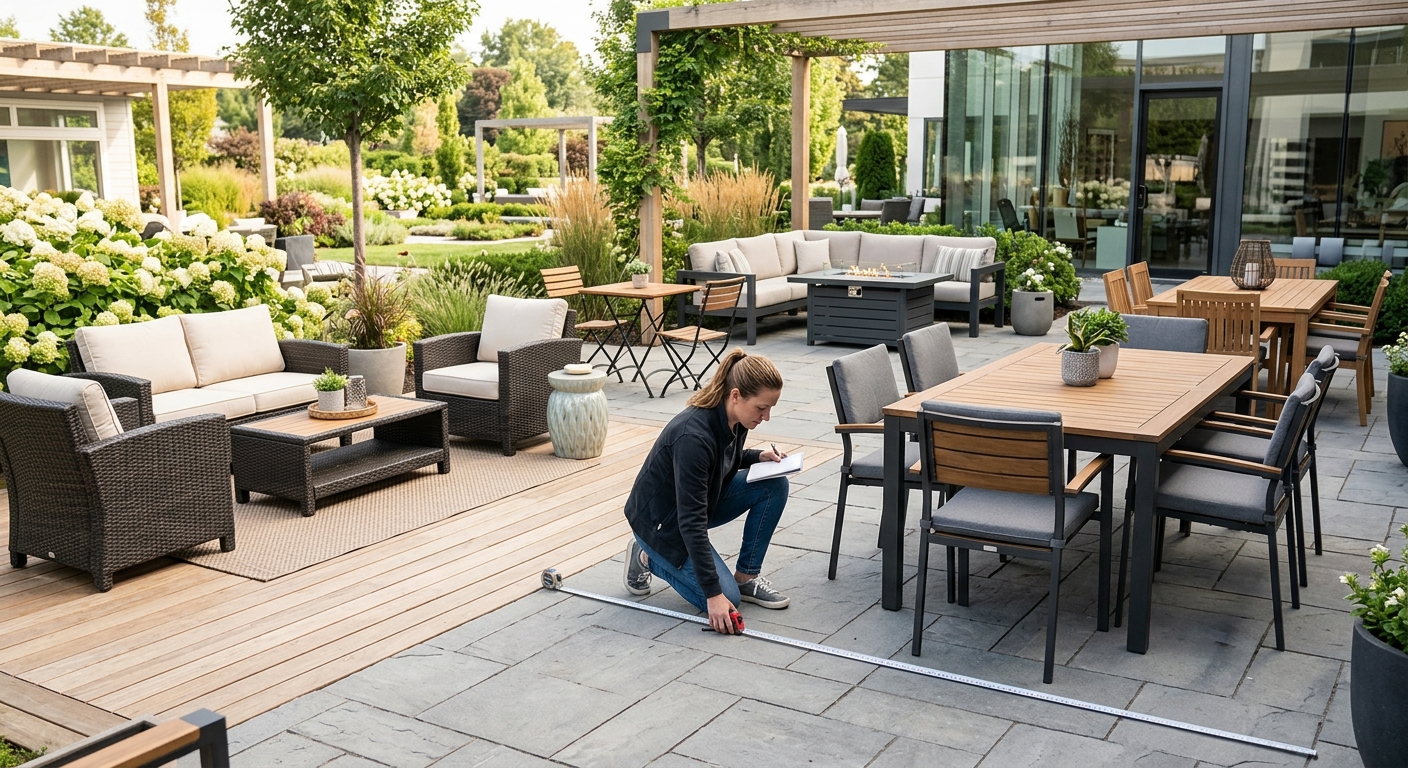
Accurate measurements are the foundation of good design. Guessing leads to furniture that is too large, too small, or poorly positioned.
How to Measure
- Measure the total length and width of your patio, deck, or garden area
- Note the location of doors, windows, and permanent fixtures (grills, posts, railings)
- Identify sun and shade patterns throughout the day
- Mark any slopes or level changes that affect furniture placement
- Account for traffic flow — leave at least 36 inches for walkways
Sketch a simple bird's-eye view of your space on graph paper, marking measurements and permanent features. This will be your planning canvas.
Step 3: Choose Your Furniture
Furniture is the functional core of your outdoor space. Select pieces that match your defined purpose, fit your measurements, and complement your home's architecture.
Dining Sets
If outdoor dining is your priority, choose a dining set that fits your typical guest count:
- 4-person sets: Ideal for small families. Tables 36-42 inches in diameter. Works on patios as small as 8x8 feet.
- 6-person sets: The most versatile size. Tables 47-60 inches. Requires a patio of at least 10x10 feet.
- 7-9 person sets: For large families or frequent entertaining. Extendable tables offer flexibility. Plan for 12x12 feet minimum.
Lounge Sets
For relaxation and conversation, lounge sets create a comfortable, living-room feel outdoors:
- 3-piece sets: A sofa and two chairs — perfect for small patios and balconies
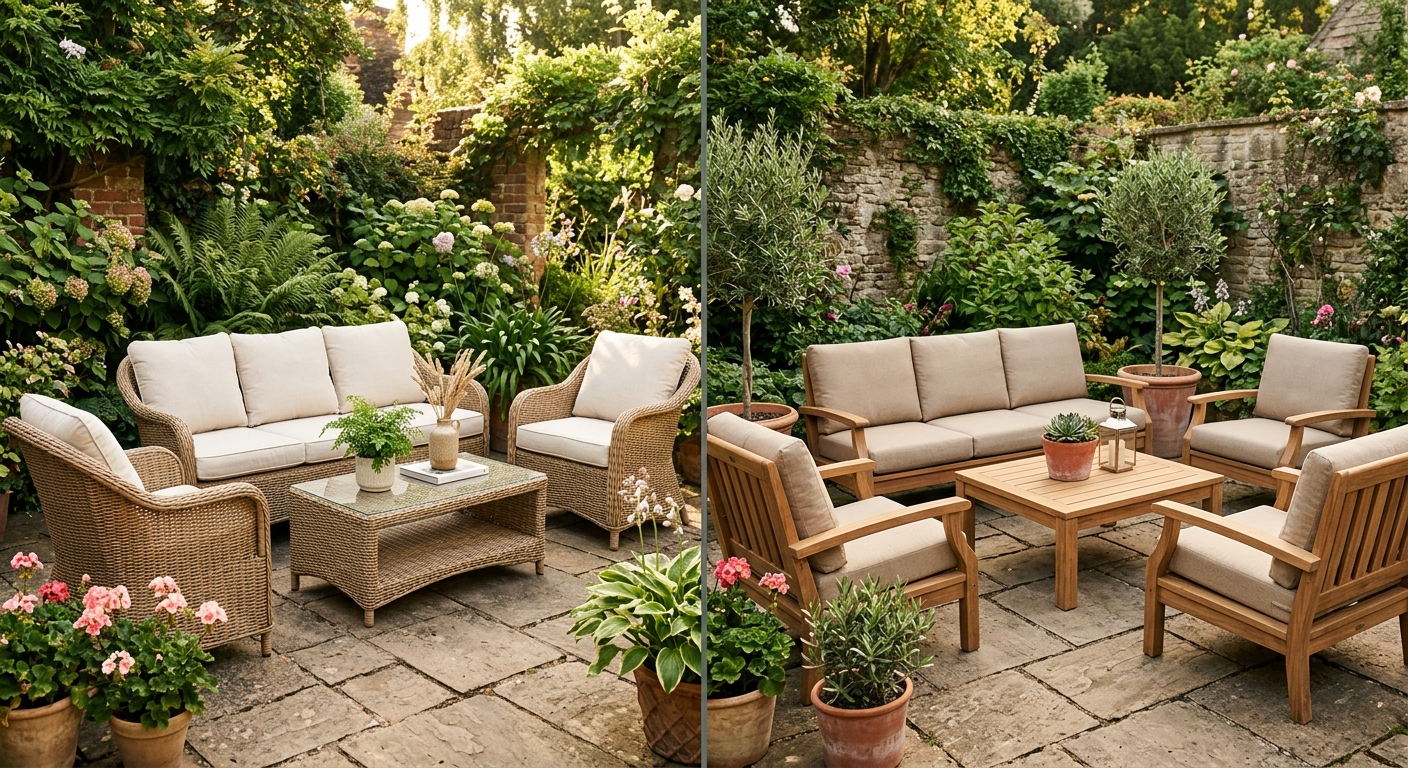
- 4-5 piece sets: Sofa, chairs, and a coffee table — the standard lounge configuration
- Corner sofa sets: L-shaped sectionals that maximize seating in compact footprints
- Daybeds and egg chairs: Statement pieces for ultimate relaxation — pair with a side table
Accent Pieces
Accent furniture adds functionality and visual interest:
- Fire pits: Create a natural gathering point and extend the use season into cooler months
- Garden benches: Provide seating in garden areas away from the main patio
- Adirondack chairs: Classic, comfortable, and perfect for a single relaxation spot
- Bistro sets: Compact dining for balconies, small patios, or garden nooks
- Storage boxes: Dual-purpose seating and storage for cushions and tools
Step 4: Arrange for Flow and Function
How you arrange furniture is as important as what you choose. Good arrangement creates natural flow, defines zones, and makes the space feel intentional rather than cluttered.
Arrangement Principles
- Anchor the largest piece first — usually the dining table or sofa — and build around it
- Create conversation groupings with seating facing each other, 6-8 feet apart
- Leave 18-24 inches between chairs and tables for comfortable seating access
- Position dining areas near the kitchen door to minimize carrying distance
- Place lounge areas in the shadiest or most scenic part of the space
- Use rugs to define zones in multi-use spaces
Step 5: Add Lighting
Lighting transforms your patio from a daytime space into an evening destination. Layer three types of lighting for maximum impact.
Ambient Lighting
- String lights: The most popular patio lighting. Warm white bulbs strung overhead create an instant atmosphere. Hang between posts, trees, or the house.
- Lanterns: Place on tables, steps, or along pathways. Battery-operated LED lanterns are safe and weather-resistant.
- Solar path lights: Line walkways and garden edges for safety and visual appeal. No wiring required.
Task Lighting
- Grill lights: Clamp-on LED lights for safe evening cooking
- Table lamps: Weather-resistant outdoor lamps for dining and reading
Accent Lighting
- Uplighting: Place spot lights at the base of trees or architectural features to create drama
- Water feature lighting: Submersible LEDs in fountains or ponds
- Step lights: Recessed lights in stair risers for safety and ambiance
Step 6: Incorporate Plants and Greenery
Plants soften hardscape surfaces, add color and fragrance, and create a sense that the space is connected to nature rather than separate from it.
Plant Selection for Patios
- Potted herbs: Rosemary, basil, and lavender are practical and aromatic. Place near the dining area.
- Ornamental grasses: Add movement and texture. Drought-tolerant and low-maintenance.
- Flowering plants: Geraniums, petunias, and bougainvillea provide season-long color.
- Evergreen shrubs: Boxwood and dwarf varieties provide year-round structure.
- Climbing plants: Train clematis or jasmine on a garden arch or trellis for vertical interest.
Container Garden Tips
- Choose pots with drainage holes — root rot kills more container plants than anything else
- Use a high-quality potting mix, not garden soil, which compacts in containers
- Group pots in odd numbers (3, 5, 7) for a more natural appearance
- Vary pot heights using plant stands or inverted pots to create visual layers
- Water container plants more frequently than garden plants — they dry out faster
Step 7: Add Decor and Finishing Touches
Decor is what makes a patio feel like an outdoor room rather than a furniture display. These finishing touches personalize the space and make it inviting.
- Outdoor rugs: Define seating areas and add color and pattern. Choose polypropylene rugs for weather resistance.
- Throw pillows: Add comfort and color. Use outdoor-rated fabrics and store indoors during rain.
- Garden arch: Create an entrance or focal point. Train climbing plants for a romantic effect.
- Fire pit: Serve as a gathering point and extend the season. Choose a style that matches your furniture.
- Water feature: A small fountain adds soothing sound and attracts birds.
- Wall art: Weather-resistant metal or ceramic pieces add personality to blank walls.
Conclusion
Creating the perfect patio and garden space is a process of layering: start with the functional foundation (furniture), add atmosphere (lighting), incorporate life (plants), and finish with personality (decor). The result should feel like a natural extension of your home — a place where you instinctively want to spend time. Start with a clear purpose, measure carefully, invest in quality furniture that fits your space, and build the design layer by layer. The best outdoor spaces are not created overnight. They evolve as you live in them, discover what works, and add pieces that make the space increasingly your own.
Key Takeaways
- Define zones for dining, lounging, and greenery before buying furniture.
- Leave clear walkways of at least 30–36 inches around major seating pieces.
- Layer lighting — ambient, task, and accent — for evening usability.
- Anchor the layout with a statement dining or lounge set, then add smaller accents.
- Use plants and textiles to soften hardscape and connect the patio to the garden.
- Choose weather-ready materials so the design still looks intentional after storms.
Frequently Asked Questions
A 4-person dining set needs a minimum patio area of 8x8 feet. A 6-person set needs at least 10x10 feet. Always add 18-24 inches behind chairs for comfortable seating access and 36 inches for walkways around the dining area.
String lights are the most cost-effective patio lighting. A 48-foot strand of warm white LED string lights costs $20-$40 and transforms the entire space. Combine with solar path lights ($3-$5 each) along walkways for a complete lighting scheme under $100.
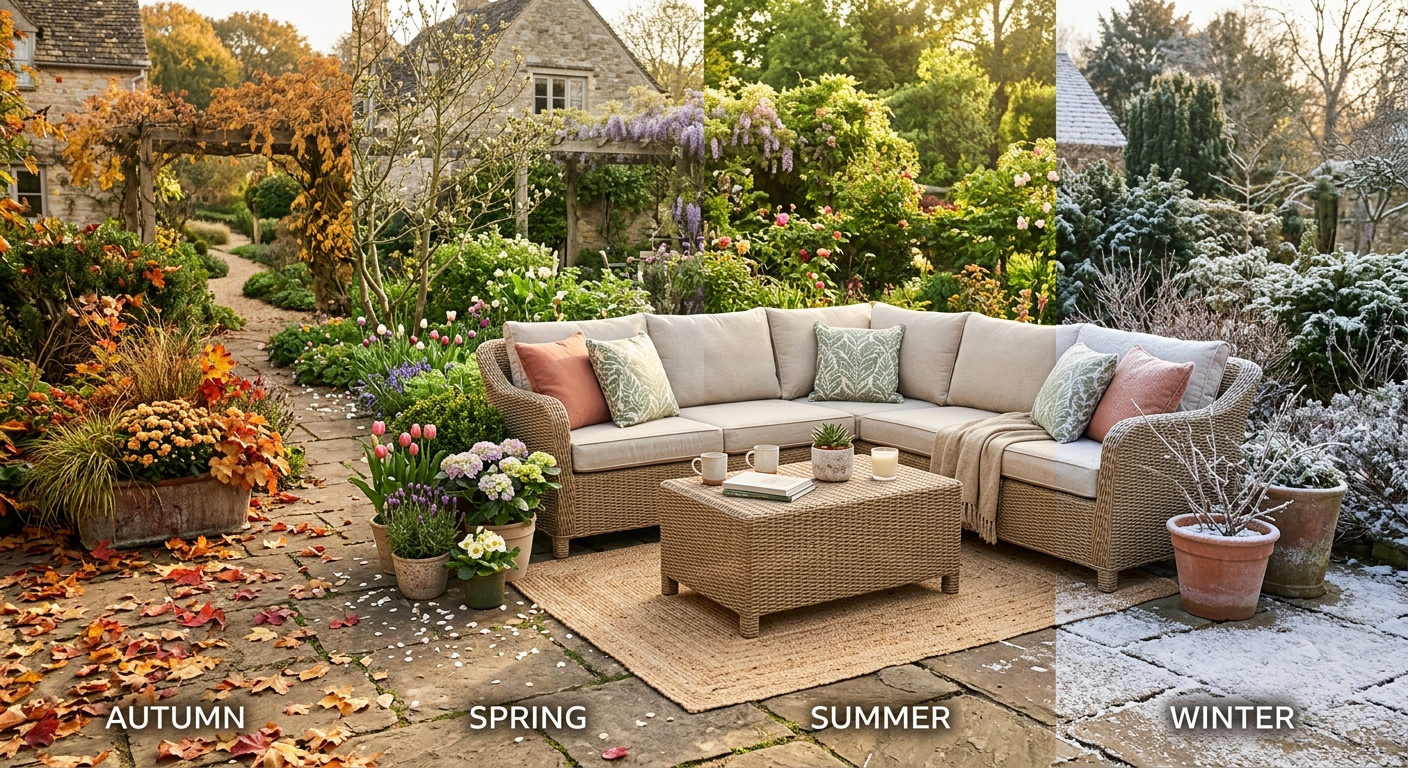
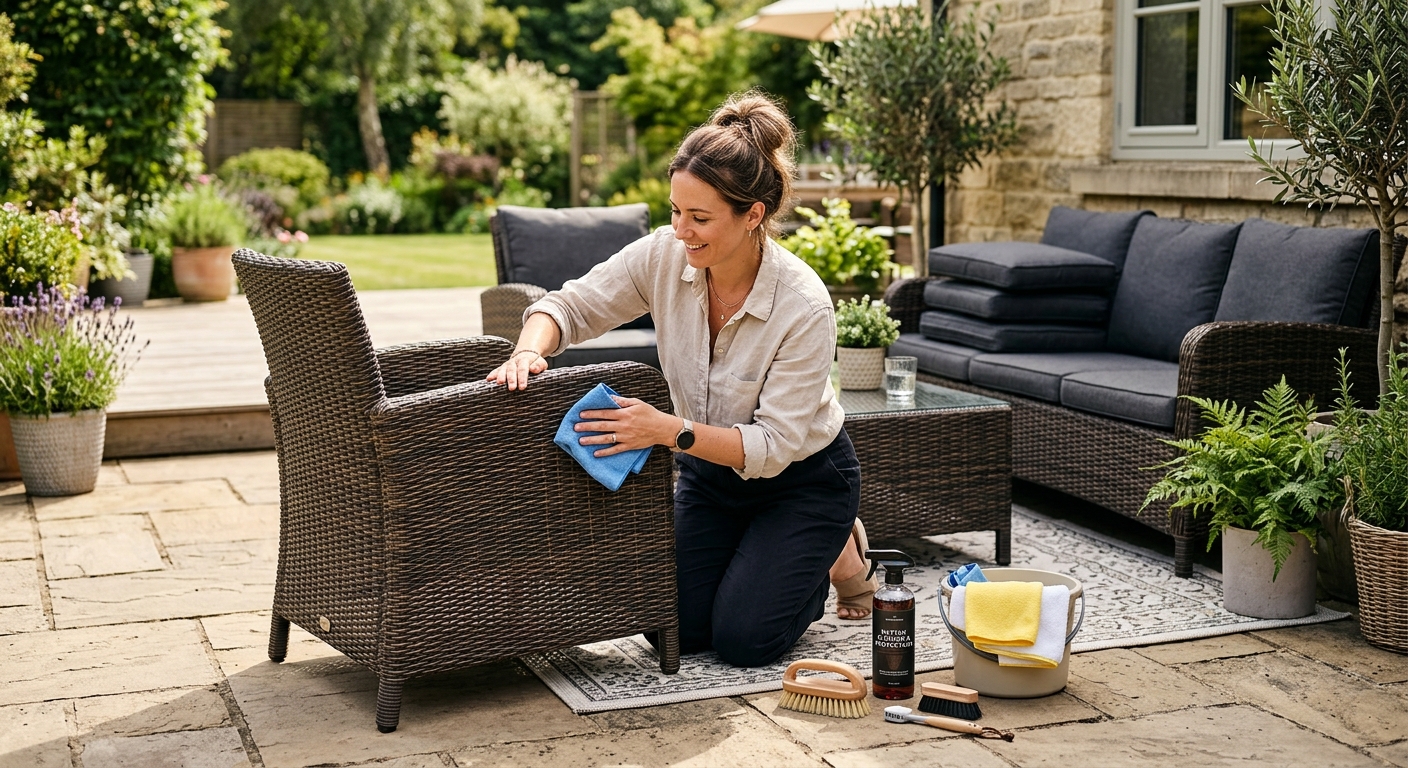
Invest in breathable furniture covers for off-season and extended rain periods. Store cushions indoors when not in use. Apply protective treatments appropriate to your furniture material (sealant for wood, wax for metal). Position furniture under a pergola or umbrella when possible.
No. Indoor rugs are not designed for outdoor exposure and will develop mold, fade, and deteriorate quickly. Use outdoor-specific rugs made from polypropylene or recycled plastic — they are designed to resist moisture, UV, and mildew.
Succulents, ornamental grasses, lavender, rosemary, and dwarf evergreen shrubs are all low-maintenance choices. They tolerate drought, require minimal pruning, and look good year-round. Avoid high-maintenance plants like roses or hydrangeas unless you are prepared for regular care.
Design your outdoor room
Discover lounge sets, dining collections, and garden pieces that turn any patio into a destination.
Explore Collection